
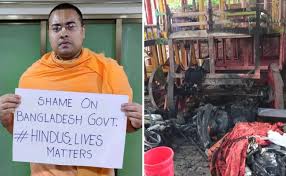
The construction of a memorial dedicated to the Hindu Holocaust stands as a tribute to the memory of the countless Hindus who have suffered atrocities and persecution solely due to their religious beliefs. Similar to the Jewish Holocaust Memorial, this monument would serve as a solemn reminder of the grave injustices endured by the Hindu community throughout history.
Delving into the annals of human civilization, one encounters a distressing chronicle replete with instances of violence stemming from ethnic animosity, linguistic disparities, and religious conflicts. Among these catalysts, the nexus between religion and warfare emerges as an enduring facet of human history. Throughout the ages, religious armies have embarked on wars with fervent prayers and an unshakeable conviction that divine providence is on their side. Tragically, history attests to the grim reality that the vanquished in religious conflicts have often been subjected to brutal coercion to embrace the victor’s faith, thereby perpetuating a cycle of religious hegemony through force.
However, it is imperative to discern that the act of praying and devoutly professing faith in a higher power does not inherently render a conflict religious in nature. True religious warfare necessitates the manifestation of religion as the central tenet of the belligerent spirit, serving as the primary ideological impetus behind the conflict. Hence, the portrayal of war as a holy crusade hinges upon religion assuming a pivotal role as the ideological bedrock of the conflict, distinct from mere acts of warfare propelled by other motives.
In commemorating the tragic episodes of persecution endured by the Hindu community, the proposed memorial not only serves as a historical testament but also as a poignant symbol of remembrance and resilience. It is through the collective remembrance of such harrowing chapters in history that societies endeavor to weave a tapestry of empathy, understanding, and a fervent commitment to upholding the sanctity of religious freedom and tolerance.
Religious wars show three basic characteristics:
- There is a fixed religious goal (often a long-term one that doesn’t end with few wars) that needs to be achieved,
- The war has the backing of a popular religious or spiritual leader, and
- There are the promised real or spiritual rewards for those that fight and those that die fighting.Genocide (both of the religious and non-religious types) is another topic that appears frequently in the world history, and among some of the infamous ones are the Jewish genocide in Germany under the Hitler regime, and mass killings under Communist rule in China and the USSR.
However, what catches the eye is the missing discourse on Hindu genocide in world history, which if viewed neutrally, will possibly stand out as the longest and among the worst genocides ever perpetuated in human history.
Hindu genocide had started long back in the Indian subcontinent with the arrival of the Islamic invaders and later evangelists from Europe (Goa inquisition). Hindu oppression and persecution (amounting to genocide) continues unabated to this day in nations such as Pakistan and Bangladesh.This article will take a look at the Hindu genocide in Bangladesh between 1947 and 1971, which continues until date, that somehow majority of the human rights activists across the world love to ignore, or even worse, try to whitewash and dilute the gravity of the genocidal crimes with unsubstantiated data. - Please support us by visit and share your comments on : https://bdrealissues.blog/ and https://daily-nobojug.com/
বাংলাদেশের দীর্ঘদিন ধরে হিন্দুরা নির্যাতিত এন্ড নিপীড়িত হয়ে আসছে এর প্রতিকার হওয়া উচিত
তুই এসব ভুয়া খবর কেন ছড়াছড়ি এইসব ভুয়া খবর লিখে তুই কি মজা পাস তোর কি কোন স্বার্থ আছে থাকলে
Brother the language you are using for your blog it is not acceptable in this country if you are not happy you can go back
Come to this country we will kill you otherwise there are no other option